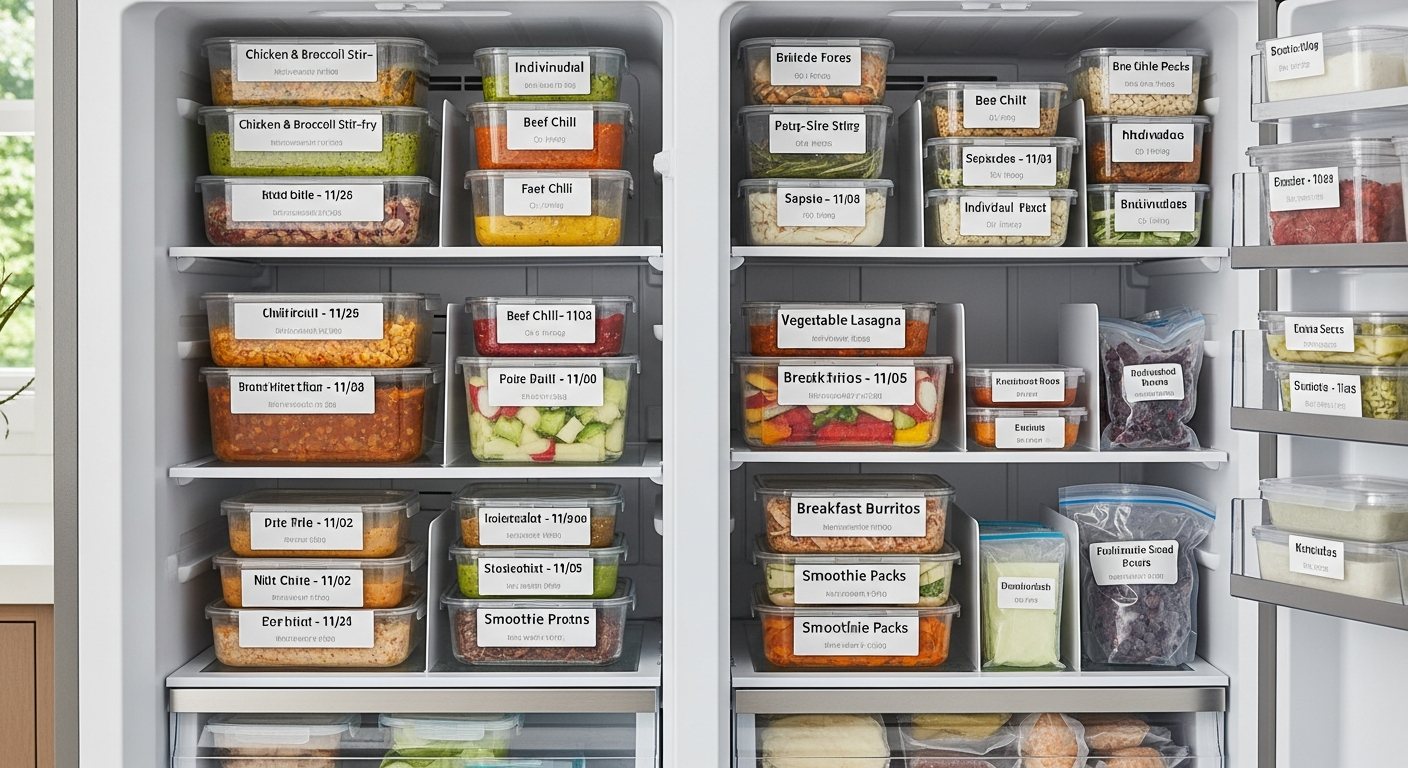
How Freezer Cooking Saved My Weeknights (And My Sanity)
I used to come home exhausted at 6:30pm, stare at my kitchen, and order takeout. Every. Single. Night. I was spending ridiculous money on mediocre food because I was too tired to cook and had nothing ready to just heat up.
According to the USDA Economic Research Service, Americans spend an average of $3,500 annually on food away from home—much of it driven by convenience rather than preference.
Table of Contents
- The Basic Concept: Cook Once, Eat Multiple Times
- What Actually Freezes Well
- The Container Strategy
- The Realistic Batch Cooking Schedule
- Freezer Meals I Actually Make
- Defrosting and Reheating Best Practices
- The Cost Analysis
- Key Takeaways
- Frequently Asked Questions
The Basic Concept: Cook Once, Eat Multiple Times
This is not meal prep where you eat the same thing five days in a row. This is building a freezer full of different meals made over weeks or months.
| Approach | Time Investment | Result |
|---|---|---|
| Marathon Sunday prep | 4-6 hours weekly | Often unsustainable |
| Double-batch method | 30 extra min per meal | Builds gradually |
| Strategic cooking | Normal cooking + extras | Sustainable long-term |
When I’m already cooking, I make extra and freeze half. Way more sustainable than spending entire Sundays in the kitchen.
Related Reading: How to Meal Prep Like a Pro
What Actually Freezes Well
Freeze Confidently
| Food Type | Freezer Life | Reheating Notes |
|---|---|---|
| Soups and stews | 2-3 months | Stovetop or microwave |
| Chili | 2-3 months | Reheats perfectly |
| Pasta sauce (not with pasta) | 2-3 months | Cook fresh pasta to serve |
| Cooked ground meat | 2-3 months | Thaw and use in any dish |
| Meatballs | 3 months | Versatile, reheat in sauce |
| Shredded chicken | 2-3 months | Tacos, salads, soup, anything |
| Cooked rice | 1-2 months | Sprinkle water, microwave |
| Breakfast burritos | 1-2 months | Microwave 2-3 minutes |
Avoid Freezing
| Food | Why It Fails |
|---|---|
| Cream-based sauces | Separate when thawed |
| Fried foods | Get soggy |
| Cooked pasta | Turns mushy |
| Raw potatoes | Texture becomes grainy |
| Mayonnaise-based items | Breaks down |
| Soft cheeses | Texture changes |
According to the National Center for Home Food Preservation, understanding which foods freeze well is essential for successful batch cooking.
The Container Strategy
Container Comparison
| Type | Pros | Cons | Best For |
|---|---|---|---|
| Glass | Microwave/oven safe, no staining | Heavy, breakable | Casseroles, reheating |
| Plastic (freezer-safe) | Light, stackable | May stain, some not microwave-safe | Soups, stews |
| Freezer bags | Space-efficient, stackable flat | Single-use concerns | Portioned items, sauces |
| Aluminum pans | Disposable, oven-ready | Single-use | Casseroles for gifting |
Labeling System
| Information to Include | Why It Matters |
|---|---|
| Contents | Know what you’re defrosting |
| Date made | Track freshness |
| Serving size | Plan portions |
| Reheating instructions | Future you will forget |
I write directly on freezer bags with permanent marker: “Chicken chili - Nov 15 - Microwave 4 minutes.”
The Realistic Batch Cooking Schedule
My Sustainable Approach
| When | What I Do | Time Investment |
|---|---|---|
| During normal cooking | Make double, freeze half | +20 min cleanup |
| When I have energy | One dedicated batch | 2-3 hours monthly |
| When something’s on sale | Buy extra, cook all, freeze | Variable |
| Easy assembly days | Prep freezer meals (burritos) | 1 hour |
The Double-Batch Method
| This Week’s Dinner | Frozen for Later |
|---|---|
| Chili | 4 portions in freezer |
| Pasta sauce | Half batch frozen |
| Meatballs | 20 extras frozen individually |
| Soup | Enough for 3 future dinners |
Freezer Meals I Actually Make
High-Rotation Favorites
| Meal | Prep Time | Freezer Life | Why It Works |
|---|---|---|---|
| Chili | 30 min active | 3 months | Tastes better reheated |
| Pasta sauce | 45 min | 3 months | Always need it |
| Breakfast burritos | 1 hour for 12 | 2 months | Grab-and-go mornings |
| Meatballs | 1 hour for 40+ | 3 months | Infinitely versatile |
| Shredded chicken | 15 min active | 3 months | Foundation for many meals |
| Cooked rice | 5 min | 2 months | Instant side dish |
Assembly-Line Prep Example
| Step | Breakfast Burritos |
|---|---|
| 1 | Scramble 12 eggs |
| 2 | Cook sausage or bacon |
| 3 | Prep fillings (cheese, peppers, salsa) |
| 4 | Assemble 12 burritos |
| 5 | Wrap each in foil |
| 6 | Freeze in gallon bag |
Result: 12 breakfasts, ~1 hour of work, ~$2 per meal.
Related Reading: Budget Eating Strategies Guide
Defrosting and Reheating Best Practices
Safe Defrosting Methods
| Method | Time | Best For |
|---|---|---|
| Refrigerator overnight | 8-12 hours | Best quality |
| Microwave defrost | 10-20 min | When you forget |
| Cold water (sealed) | 1-2 hours | Medium emergency |
According to the FDA, never defrost at room temperature—bacteria multiply rapidly between 40-140°F.
Reheating for Best Results
| Food Type | Best Method | Tip |
|---|---|---|
| Soups/stews | Stovetop | Even heating |
| Casseroles | Oven 350°F covered | Add splash of liquid |
| Burritos | Microwave | Cover with damp paper towel |
| Rice/grains | Microwave | Sprinkle water, cover |
The Cost Analysis
Freezer Cooking Economics
| Meal Source | Average Cost | Time Investment |
|---|---|---|
| Takeout | $12-20/meal | None |
| Frozen dinners (store) | $4-8/meal | None |
| Homemade freezer meals | $2-5/meal | Distributed over time |
Monthly Savings Example
| Scenario | Monthly Cost |
|---|---|
| Takeout 5x/week | $300-400 |
| Store frozen dinners | $80-160 |
| Homemade freezer meals | $40-100 |
According to Consumer Reports, households using batch cooking save an average of $200-400 monthly on food costs.
Key Takeaways
- Don’t marathon prep — Build your freezer gradually by doubling recipes
- Know what freezes well — Sauces yes, cream-based no, pasta separately
- Label everything — Date, contents, reheating instructions
- Use appropriate containers — Match container to food type
- Defrost safely — Refrigerator overnight is best
- Simple recipes work best — Complex dishes often freeze poorly
Frequently Asked Questions
How do I prevent freezer burn?
Freezer burn happens when air contacts food surface. The USDA recommends: remove as much air as possible before sealing, use containers sized appropriately for portions (less empty space), wrap items tightly, and use food within recommended timeframes. Freezer burn is safe to eat but affects quality.
Can I freeze meals that have already been refrigerated?
Yes, as long as they’ve been properly refrigerated (under 40°F) and haven’t exceeded the 3-4 day safe refrigerator window. According to the FDA, the quality may be slightly lower than freezing immediately after cooking, but it’s perfectly safe. Label with the original cook date, not the freeze date.
How long can freezer meals actually last?
For quality, most cooked foods are best within 2-3 months. For safety, properly frozen food remains safe indefinitely but quality declines. The National Center for Home Food Preservation recommends using a first-in-first-out rotation system and dating everything clearly.
What’s the best way to organize a freezer for meal prep?
Use a zone system: designate areas for proteins, complete meals, breakfast items, and components. Keep an inventory list on the freezer door or in a notes app. Place newest items in the back, pull from the front. According to Good Housekeeping Institute testing, organized freezers reduce food waste by up to 40%.
Is it worth investing in a chest freezer for batch cooking?
If you’re committed to batch cooking and have space, yes. Chest freezers are more energy-efficient and provide significantly more capacity than freezer-fridge combos. Energy Star certified models cost $40-60 annually to run and pay for themselves through food savings within 1-2 years for active batch cookers.
Freezer cooking isn’t about being perfect—it’s about being slightly more prepared than you were before. Some weeks I add five meals to my freezer. Some weeks I add nothing. But having that backup supply means tough weeks don’t automatically equal expensive takeout or nutritional disaster.