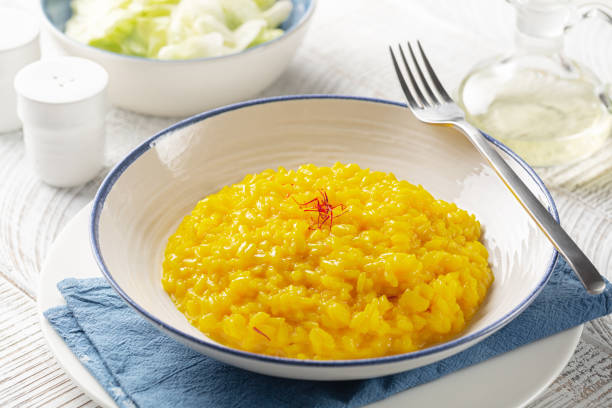
Authentic Risotto Milanese: The Golden Italian Classic
Risotto Milanese is one of Italy’s most iconic dishes, instantly recognizable by its luxurious golden hue and rich, creamy texture. Originating in Milan, this elegant rice dish gets its signature color and distinctive flavor from saffron, one of the world’s most precious spices. While simple in its ingredients, Risotto Milanese represents the essence of northern Italian cooking—transforming humble elements into something sublime through technique and patience.
In this guide, I’ll walk you through creating an authentic version of this classic recipe, sharing the traditional methods that have been passed down through generations of Italian cooks. Whether you’re preparing it as a sophisticated side dish for osso buco (as is traditional in Milan) or serving it as a stunning main course, mastering Risotto Milanese is a valuable addition to any cook’s repertoire.
Table of Contents
- The History Behind the Golden Dish
- The Essential Ingredients
- Equipment You’ll Need
- The Authentic Recipe
- Step-by-Step Technique
- Tips for Risotto Perfection
- Traditional Pairings
- Variations and Modern Interpretations
- Key Takeaways
- Frequently Asked Questions
The History Behind the Golden Dish
Before diving into the recipe, let’s appreciate the rich cultural history of this iconic dish. According to Italia.it, the official tourism website of Italy, Risotto Milanese dates back to the medieval period, with written records appearing as early as the 16th century.
A popular legend ties its creation to an artist working on Milan’s magnificent Duomo cathedral. According to the tale, a master glassmaker had been using saffron to create vibrant stained glass windows. When his apprentice jokingly added some of the valuable spice to a rice dish at a wedding feast in 1574, the golden risotto was an unexpected sensation.
While the story may be more myth than fact, the dish has remained a pillar of Milanese cuisine for centuries. Traditionally served alongside osso buco (braised veal shanks), Risotto Milanese eventually became celebrated in its own right as a primo piatto (first course) that showcases the region’s dedication to elegance and simplicity.
The Essential Ingredients
The beauty of Risotto Milanese lies in its relatively short ingredient list. However, each component plays a crucial role in creating the dish’s distinctive character:
Ingredient Overview
| Ingredient | Role | What to Look For |
|---|---|---|
| Arborio or Carnaroli rice | Foundation | High starch content for creaminess |
| Saffron | Color and flavor | Threads, not powder; intense aroma |
| Broth | Cooking liquid | Homemade beef or chicken preferred |
| White wine | Acidity and depth | Dry Italian variety |
| Onion/Shallot | Aromatic base | Finely diced, golden |
| Parmigiano-Reggiano | Finishing richness | Authentic Italian, freshly grated |
| Butter | Creaminess | Unsalted, high quality |
About Saffron
Saffron is the defining ingredient in Risotto Milanese, and it’s worth understanding why it’s so precious. According to the Saffron Institute, each saffron thread is hand-harvested from the stigmas of crocus flowers, with approximately 150,000 flowers required to produce just one kilogram of saffron.
Tips for buying saffron: - Always purchase threads rather than powder (less likely to be adulterated) - Look for deep red color with orange tips - Store in a cool, dark place in an airtight container - A little goes a long way—1/4 teaspoon is enough for 4 servings
Equipment You’ll Need
| Equipment | Purpose | Notes |
|---|---|---|
| Heavy-bottomed pot or Dutch oven | Even heat distribution | Prevents rice from sticking |
| Wooden spoon | Stirring | Traditional choice for risotto |
| Ladle | Adding broth | Allows for controlled portions |
| Small bowl | Blooming saffron | Heat-resistant |
| Cheese grater | Fresh Parmigiano | Microplane or box grater |
The Authentic Recipe
Ingredients (Serves 4 as main course, 6 as side)
| Ingredient | Amount | Metric |
|---|---|---|
| Carnaroli or Arborio rice | 1½ cups | 300g |
| Yellow onion or shallots | 1 small / 2 medium | Finely diced (¼ cup) |
| Unsalted butter | 4 tablespoons, divided | 55g |
| Extra virgin olive oil | 2 tablespoons | 30ml |
| Dry white wine | ½ cup | 120ml |
| Hot beef or chicken broth | 5-6 cups | 1.2-1.4L |
| Saffron threads | ¼ teaspoon | About 0.5g |
| Parmigiano-Reggiano | ¾ cup, freshly grated | 75g |
| Salt | To taste | - |
| Black pepper (optional) | Freshly ground | - |
Step-by-Step Technique
1. Prepare the Saffron (10 minutes before cooking)
Begin by placing the saffron threads in a small bowl with 2-3 tablespoons of the hot broth. Allow them to steep for at least 10 minutes to extract maximum color and flavor. This process, known as “blooming,” is essential for distributing the saffron evenly throughout the dish.
2. Heat the Broth
Keep the remaining broth warm in a saucepan over low heat. Critical: The broth must be hot when added to the rice to ensure even cooking and proper starch release. Cold broth will shock the rice and interrupt the cooking process.
3. Sauté the Aromatics
In a heavy-bottomed pot or Dutch oven, heat 2 tablespoons of butter and the olive oil over medium heat. Add the finely diced onion and a pinch of salt. Sauté gently until translucent but not browned, about 5-7 minutes. Patience is key here—properly softened aromatics create the foundation of flavor.
4. Toast the Rice (Tostatura)
Add the rice to the pot and stir to coat each grain with the fat. This crucial step creates a protective coating on each grain that helps it release starch slowly while maintaining its structure.
| What to Look For | Time |
|---|---|
| Edges become translucent | 1-2 minutes |
| Centers remain white/opaque | 2-3 minutes |
| Light crackling sound | Sign it’s ready |
5. Add the Wine
Pour in the white wine and stir constantly. Cook until the wine is fully absorbed and the alcohol aroma has dissipated, about 2 minutes. You should no longer smell sharp alcohol.
6. The Broth Addition Process
Now begins the meditative heart of risotto making. Follow this process:
- Add one ladleful of hot broth (about ½ cup) to the rice
- Stir gently but consistently
- Maintain medium-low heat (gentle bubbling)
- When liquid is nearly absorbed but rice isn’t dry, add another ladleful
- Repeat for approximately 15-18 minutes
7. Incorporate the Saffron
After about 10 minutes of adding broth, stir in the saffron-infused broth. The rice will immediately begin taking on the characteristic golden color. Continue the process of adding broth and stirring.
8. Test for Doneness
After approximately 18-20 minutes total cooking time, begin testing the rice:
| Doneness Test | What You’re Looking For |
|---|---|
| Bite test | Tender but with slight firmness at center (al dente) |
| Consistency | Creamy and fluid, not stiff |
| Wave test | When you shake the pot, it should ripple (“all’onda”) |
9. Final Mantecatura
This final step distinguishes great risotto from good risotto:
- Remove the pot from heat
- Add remaining 2 tablespoons cold butter, cut into small pieces
- Add the grated Parmigiano-Reggiano
- Stir vigorously to emulsify
- Cover and let rest for 2 minutes
10. Serve Immediately
Risotto waits for no one. Serve immediately on warmed plates. Traditionally, Risotto Milanese is served flat (not mounded) and eaten from the outside in as it cools at the edges first.
Related Reading: Simple Italian Salad with Homemade Dressing
Tips for Risotto Perfection
The Do’s
| Tip | Why It Matters |
|---|---|
| Never rinse the rice | Surface starch creates creaminess |
| Keep broth hot at all times | Cold broth interrupts cooking |
| Use room temperature cheese | Incorporates more smoothly |
| Serve on warmed plates | Maintains proper consistency |
| Stir often, but not constantly | Prevents sticking without making it gluey |
The Don’ts
| Mistake | Consequence |
|---|---|
| Adding all broth at once | Gummy, unevenly cooked rice |
| Rushing the cooking | Undercooked or mushy texture |
| Skipping the mantecatura | Missing signature creaminess |
| Letting it sit before serving | Becomes stiff and loses “wave” |
| Using pre-grated Parmesan | Inferior flavor, doesn’t melt properly |
Traditional Pairings
In Milan, Risotto Milanese is classically served as a side dish to osso buco (braised veal shanks). The rich, saffron-infused risotto complements the tender meat and complex sauce perfectly.
Perfect Pairings
| Main Course | Why It Works |
|---|---|
| Osso Buco | Traditional Milanese combination |
| Roasted chicken | Simple protein lets risotto shine |
| Grilled veal chop | Classic Northern Italian pairing |
| Pan-seared fish | Light protein balances richness |
Wine Pairings
According to Wine Spectator, the best wines to pair with Risotto Milanese include:
- White: Soave, Lugana, or Franciacorta
- Red: Light Nebbiolo or young Barbera
- Sparkling: Franciacorta Brut
Variations and Modern Interpretations
While purists might argue that Risotto Milanese should remain untouched, modern chefs have created thoughtful variations:
| Variation | Description |
|---|---|
| With Bone Marrow | Roasted marrow folded into finished risotto |
| Seafood Version | Delicate scallops or shrimp added |
| Vegetarian | Mushroom or vegetable broth base |
| Risotto al Salto | Leftover risotto pan-fried into crispy cake |
However, most Italian chefs would advise mastering the classic version before attempting variations.
Related Reading: Understanding Different Cuisine Styles Around the World
Key Takeaways
- Quality saffron is essential — Buy threads, not powder, and bloom before using
- Hot broth only — Cold broth disrupts the cooking process
- Toast the rice (tostatura) — Creates the foundation for proper texture
- Patience is required — Plan for 25-30 minutes of active cooking
- Mantecatura is crucial — The final butter and cheese step creates signature creaminess
- Serve immediately — Risotto should be “all’onda” (wavy) when plated
Frequently Asked Questions
Why is my risotto gummy or mushy?
Gummy risotto usually results from one of three issues: using too much broth at once (add gradually), stirring too aggressively (gentle stirring is best), or overcooking (test early and often after 18 minutes). According to America’s Test Kitchen, the key is maintaining a gentle simmer and adding broth incrementally.
Can I make risotto ahead of time?
Traditional risotto is best served immediately, but there is a restaurant trick: cook the risotto to about 80% done (slightly underdone), spread it on a sheet pan to cool quickly, then refrigerate. To serve, reheat with a splash of broth and finish with butter and cheese. It won’t be quite as perfect as fresh, but it’s a practical compromise for entertaining.
What can I substitute for saffron?
There’s no true substitute for saffron’s unique flavor, but turmeric can provide similar golden color (use 1/2 teaspoon). However, the flavor will be noticeably different. Some cooks use a pinch of sweet paprika plus turmeric for color, but this creates a different dish entirely. For authentic Risotto Milanese, saffron is essential.
What’s the difference between Arborio and Carnaroli rice?
Both work well for risotto, but they have subtle differences. Carnaroli has higher starch content and firmer texture, making it more forgiving and preferred by many Italian chefs. Arborio is more widely available and slightly stickier when cooked. Either will produce excellent results with proper technique.
How do I know when to stop adding broth?
Stop adding broth when the rice is al dente (tender but with a slight firmness at the center) and the consistency is creamy and fluid. The risotto should flow slowly when you tilt the pot. It’s better to stop slightly early—the mantecatura step adds moisture, and risotto continues to absorb liquid as it rests.
Creating authentic Risotto Milanese is as much about technique and patience as it is about ingredients. With practice, you’ll create a dish of extraordinary elegance that connects you to centuries of Italian culinary tradition. Buon appetito!