Kitchen Tools Worth Buying vs. Complete Waste of Money
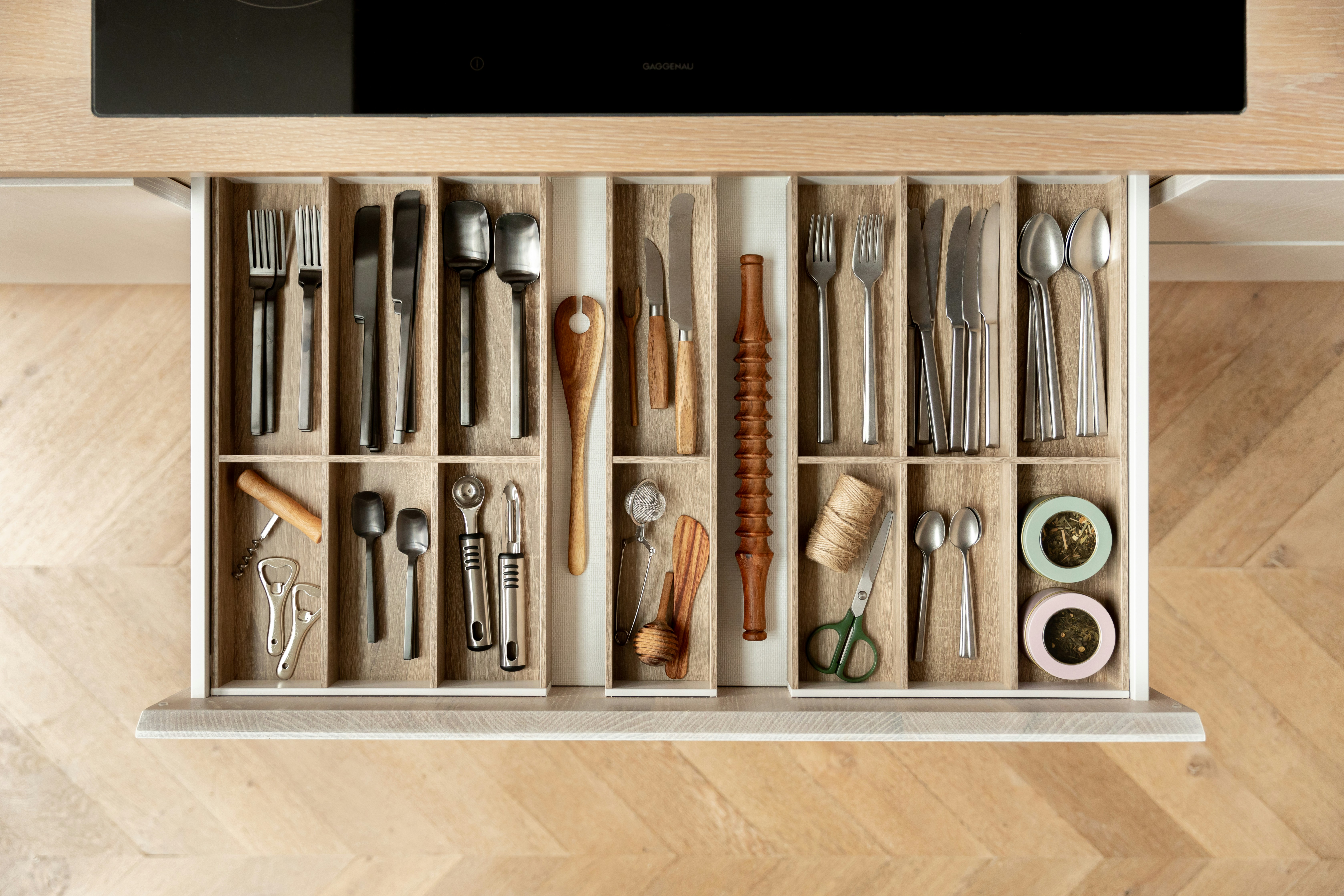
My kitchen has been through phases. The “I need every gadget” phase left me with drawers full of tools I used once. The “minimalist cooking” phase left me struggling with inadequate equipment. After years of trial and error, I’ve figured out what’s actually worth the money and counter space.
According to the Culinary Institute of America, professional chefs rely on surprisingly few tools—the difference is they’re high-quality and used properly.
Table of Contents
- Tools Worth Every Penny
- Complete Wastes of Money
- The “It Depends” Category
- Tools That Surprised Me
- Questions to Ask Before Buying
- Building Your Kitchen Gradually
- Key Takeaways
- Frequently Asked Questions
Tools Worth Every Penny
Essential Kitchen Tools
| Tool | Why It’s Essential | Price Range | Lifespan |
|---|---|---|---|
| Good chef’s knife (8”) | Handles 90% of tasks | $50-$150 | 10+ years |
| Cast iron skillet | Naturally non-stick, versatile | $25-$50 | Lifetime |
| Instant-read thermometer | Eliminates guessing | $15-$30 | 5+ years |
| Kitchen scale | Precise measurements | $15-$25 | 10+ years |
Why These Matter
Chef’s Knife: A sharp, well-balanced chef’s knife makes everything easier. Chopping vegetables becomes faster and safer. Prep work goes from tedious to almost enjoyable. You don’t need a whole set—one good 8-inch knife handles 90% of kitchen tasks.
Cast Iron Skillet: A well-seasoned cast iron is naturally non-stick, retains heat beautifully, and goes from stovetop to oven seamlessly. I use mine for eggs, steaks, cornbread, even pizza. Plus you can get a good one for under $30.
Instant-Read Thermometer: This ended my era of cutting into meat to check doneness. No more overcooked chicken or undercooked pork. The USDA Food Safety guidelines recommend internal temperature as the only reliable indicator of food safety.
Kitchen Scale: Weighing ingredients is more accurate and often faster than measuring cups. Essential for consistent baking and helpful for portion control.
Complete Wastes of Money
Unitaskers to Avoid
| Tool | The Promise | The Reality |
|---|---|---|
| Avocado tools | Easy avocado prep | Knife + spoon works better |
| Banana slicers | Perfect slices | A knife does this fine |
| Electric can openers | Effortless opening | Manual is faster, easier to clean |
| Bread makers | Fresh bread at home | Mediocre results, huge footprint |
| Egg separators | Perfect separation | Use the shell method |
| Garlic press | Quick garlic prep | Harder to clean than mincing |
Why I Stopped Buying These
I bought three different avocado gadgets before admitting that a knife and spoon work better. The avocado slicer, the pit remover, the “avocado tool”—they’re all solutions to problems that don’t exist.
According to kitchen organization expert Marie Kondo, single-purpose gadgets are the leading cause of kitchen clutter. Every one of these takes up space that could go to something useful.
Related Reading: How to Meal Prep Like a Pro
The “It Depends” Category
Conditional Recommendations
| Tool | Buy If… | Skip If… |
|---|---|---|
| Food processor | You cook often, make hummus/pesto regularly | You cook for 1-2 people occasionally |
| Stand mixer | You bake regularly (weekly+) | You bake a few times per year |
| Air fryer | You love crispy food, limited oven use | You have convection oven |
| Rice cooker | You eat rice 2+ times per week | Rice is occasional |
| Slow cooker | You like hands-off cooking | You prefer quick cooking |
The Usage Threshold
The Consumer Reports kitchen equipment guide suggests applying a “cost-per-use” calculation:
| Tool Cost | Uses Per Year | Cost Per Use |
|---|---|---|
| $200 stand mixer | 5 | $40/use (bad) |
| $200 stand mixer | 50 | $4/use (good) |
| $30 rice cooker | 10 | $3/use (fine) |
| $30 rice cooker | 100 | $0.30/use (great) |
Tools That Surprised Me
Surprisingly Essential
| Tool | Expected | Reality |
|---|---|---|
| Microplane grater | Fancy extra | Essential for citrus zest, hard cheese, garlic |
| Bench scraper | Baker’s tool | Useful for cleanup, portioning, transferring |
| Spider strainer | Restaurant equipment | Perfect for pasta, blanching, frying |
Surprisingly Useless
| Tool | Expected | Reality |
|---|---|---|
| Garlic press | Time saver | Harder to clean than just mincing |
| Mandoline | Perfect slices | Dangerous, a knife works fine |
| Salad spinner | Dry lettuce | Paper towels work as well |
Questions to Ask Before Buying
The Four-Question Test
| Question | If Yes | If No |
|---|---|---|
| What am I currently using, and why isn’t it working? | Continue | Stop here |
| How often will I realistically use this? | Weekly+ = good | Monthly = reconsider |
| Where will I store it when not using it? | Have space | Problem |
| Is this genuinely easier than what I’m doing? | Buy | Skip |
Most kitchen gadgets fail at least one of these questions. The good tools pass all of them easily.
Building Your Kitchen Gradually
The Staged Approach
| Stage | Tools | Total Investment |
|---|---|---|
| Beginner | Chef’s knife, cutting board, basic pots/pans | $100-$150 |
| Intermediate | Cast iron, thermometer, scale | +$50-$100 |
| Advanced | Specialty items based on cooking style | As needed |
The “Wait and Notice” Method
| Step | Action |
|---|---|
| 1 | Notice when a task is frustrating or time-consuming |
| 2 | Research what tool would actually help |
| 3 | Wait 2 weeks before purchasing |
| 4 | If still wanting it, buy quality version |
Related Reading: Essential Healthy Cooking Techniques
Key Takeaways
- Quality over quantity — 5 excellent tools beat 20 mediocre ones
- Avoid unitaskers — Single-purpose gadgets usually waste money and space
- Match tools to usage — Only buy specialty items you’ll use regularly
- Build gradually — Add tools as you discover specific needs
- The four-question test — Must pass all four to be worth buying
- Invest in basics — Good knife, cast iron, thermometer, scale
Frequently Asked Questions
How much should I spend on a chef’s knife?
According to America’s Test Kitchen, you don’t need to spend $200 for a quality knife. Their testing found excellent options in the $50-$100 range. The key is maintaining it—any good knife becomes a bad knife without proper sharpening. Budget $50-$100 for the knife, $15-$30 for a honing steel.
Is cast iron really worth the maintenance?
Cast iron maintenance is simpler than people think. Wash with hot water (soap is actually fine occasionally), dry immediately, apply a thin layer of oil. That’s it. According to Lodge Cast Iron, a well-maintained cast iron can last literally generations. The “maintenance” takes 30 seconds per use.
What’s the best all-around pan if I can only have one?
A 12-inch stainless steel skillet with oven-safe handle is the most versatile single pan. It sears meat better than non-stick, can go in the oven, and works for almost every cooking method. Add a lid and it can even braise. Cast iron is a close second but heavier and requires more care.
Should I buy expensive “professional” cookware?
Consumer-grade professional lines (All-Clad, Le Creuset) are excellent but expensive. The Serious Eats equipment testing often finds that mid-range options perform nearly as well for 30-50% of the cost. The exception: items you’ll use daily for decades (cast iron, quality knives) where paying more makes sense.
How do I know when a kitchen tool is actually broken vs. just needs maintenance?
Non-stick pans with visible scratches or flaking coating should be replaced. Dull knives need sharpening, not replacement. Warped pans (they wobble on flat surfaces) should go. Cast iron with rust can usually be restored with scrubbing and re-seasoning. When in doubt, manufacturers often have care guides.
The goal isn’t to have every tool available—it’s to have the right tools for the way you actually cook. A few excellent tools that you use regularly are worth more than a drawer full of gadgets that sounded good when you bought them.