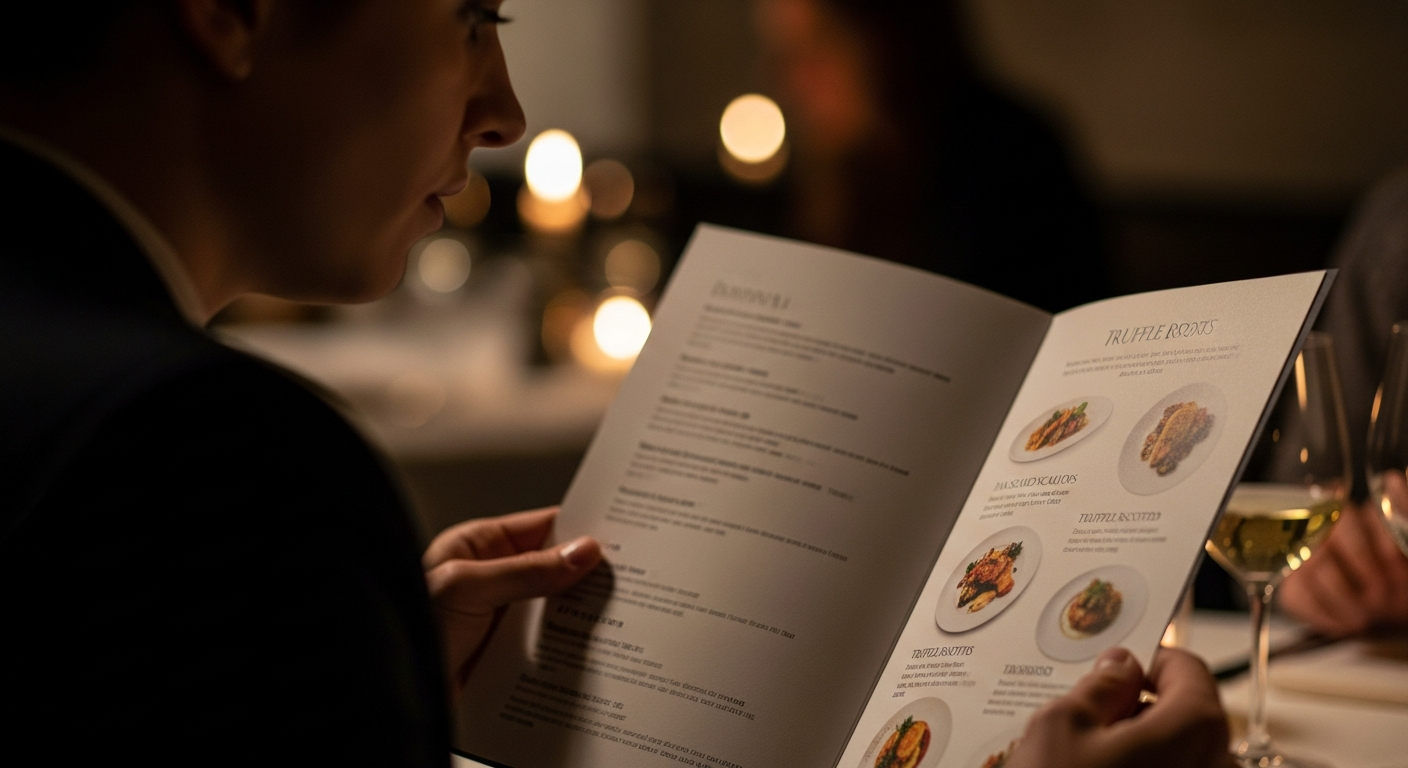
What Servers Wish You Knew About Ordering at Restaurants (From Someone Who’s Been There)
I spent five years waiting tables at everything from diners to upscale restaurants. Now when I’m the customer, I see people making the same mistakes that make their meals worse and their servers quietly judge them.
According to the National Restaurant Association, dining satisfaction is influenced as much by ordering strategy as food quality—yet few diners think strategically about the process.
Table of Contents
- Reading the Menu Strategically
- Questions Worth Asking
- The Substitution Reality
- Timing Your Visit
- The Tipping Conversation
- Handling Problems Effectively
- Key Takeaways
- Frequently Asked Questions
Reading the Menu Strategically
The menu is not a neutral list of equally good options. It’s a strategic document designed to maximize profit while managing kitchen workflow.
Menu Item Analysis
| Menu Position | What It Typically Means |
|---|---|
| Chef’s special / signature dish | Usually genuinely good—their reputation |
| Daily specials | Either fresh and creative OR using up inventory |
| Most expensive item | Not always best—sometimes just expensive ingredients |
| Second-most expensive | Often the sweet spot—quality without prestige markup |
| Cheapest items | High-margin, easy bulk production |
Smart Menu Reading
| Look For | Indicates |
|---|---|
| Dishes requiring actual cooking skill | Better quality |
| Multiple components listed | More preparation involved |
| Seasonal ingredients mentioned | Fresher sourcing |
| Simple preparations of quality ingredients | Often excellent |
Related Reading: How to Find the Best Local Restaurant
Questions Worth Asking
Good Questions (Servers Appreciate These)
| Question | Why It Works |
|---|---|
| “What do you recommend?” | Opens genuine dialogue |
| “What’s most popular?” | Popular for a reason |
| “What do you eat when you work here?” | Gets the real answer |
| “Is this dish shareable?” | Shows consideration |
| “Can I make substitutions?” | Polite first approach |
Bad Questions (That Frustrate Staff)
| Question | Why It’s Problematic |
|---|---|
| “Is it fresh?” | Everything should be—meaningless question |
| “What’s good here?” (not listening to answer) | Wastes everyone’s time |
| “Can you make something completely off-menu?” | Disrupts kitchen workflow |
The Substitution Reality
Substitution Difficulty Levels
| Substitution Type | Likely Response |
|---|---|
| Side dish swap from same menu section | Easy, no problem |
| Leaving something off | Simple |
| Sauce on the side | Standard request |
| Cooking temperature preference | Usually accommodated |
| Swapping proteins | Possible but may affect price |
| Creating entirely new dish | Probably not happening |
The Allergy vs. Preference Distinction
| Type | How to Communicate | Kitchen Response |
|---|---|---|
| Actual allergy | State clearly: “I have a [X] allergy” | Taken very seriously, special protocols |
| Strong preference | “I don’t like [X], can it be left out?” | Accommodated when possible |
| Lifestyle choice | Explain once, simply | Respected if reasonable |
According to the Food Allergy Research & Education (FARE), clear allergy communication is essential—but falsely claiming allergies undermines safety protocols for those with real allergies.
Timing Your Visit
Strategic Timing for Quality
| Time Slot | Kitchen Status | Your Experience |
|---|---|---|
| 30 min after opening | Fresh, alert, organized | Best quality |
| Late lunch (2-3pm) | Practiced but not slammed | Good attention |
| Early dinner (5-6pm) | Before rush | Quality and speed |
| Peak dinner (7-8pm weekends) | Overwhelmed | Variable quality |
| Sunday brunch | Universally hated by kitchens | Often chaotic |
| Right before closing | Tired staff, limited options | Skip if possible |
According to restaurant industry research, off-peak dining yields 15-20% higher satisfaction scores.
Related Reading: Restaurant Dining Etiquette Guide
The Tipping Conversation
Current Tipping Norms
| Service Level | Standard Tip |
|---|---|
| Good to excellent | 20% |
| Acceptable | 18% |
| Below expectations | 15% (with feedback) |
| Poor with no resolution | 10-15% (explain to management) |
Tipping Realities
| Perception | Reality |
|---|---|
| “15% is standard” | Outdated—20% is now baseline for good service |
| “I’ll tip on pre-tax” | Most people don’t calculate this |
| “Low tip sends message” | Without explanation, staff assume you’re cheap |
| “Compliments instead of tip” | Rent isn’t paid with compliments |
According to the Bureau of Labor Statistics, tipped workers rely on gratuities for majority of income—typically 60-80% of total compensation.
Handling Problems Effectively
When Something’s Wrong
| Timing | Approach | Likely Outcome |
|---|---|---|
| Immediate | “This isn’t what I ordered / isn’t cooked right” | Fixed promptly, usually comped |
| Mid-meal | “This isn’t quite right, can you help?” | May still be fixed |
| After eating most of it | “I didn’t like this” | Too late—looks like free food attempt |
| Online review only | No complaint to restaurant | Nothing gets fixed, looks petty |
Effective vs. Ineffective Complaints
| Effective | Ineffective |
|---|---|
| Specific and immediate | Vague after the fact |
| Solution-oriented | Just venting |
| To server or manager directly | Passive-aggressive remarks |
| Gives opportunity to fix | Posts negative review without telling restaurant |
Key Takeaways
- Menu items aren’t equal — Second-most expensive often best value
- Ask the right questions — “What do you eat here?” gets real answers
- Be clear about allergies — Don’t fake them
- Timing affects quality — Off-peak = better food and service
- 20% is standard now — For good service
- Complain immediately if needed — Give them chance to fix it
Frequently Asked Questions
How do I send something back without being rude?
Be direct but polite: “I’m sorry, but this isn’t cooked the way I ordered it. Could you please fix it?” Don’t apologize excessively or make elaborate excuses. According to restaurant management experts, staff prefer clear feedback to passive suffering—they want you to enjoy your meal. Flag issues immediately, not after you’ve eaten half.
What does “chef’s special” really mean?
It could mean the chef is genuinely excited about something creative, or it could mean they’re using up ingredients before they spoil. Ask: “What makes this special today?” A genuine special gets enthusiastic explanation. If the server seems uncertain or gives generic answers, the dish may not be worth the usually higher price.
Is it rude to ask for modifications?
One or two reasonable modifications are fine and expected. The National Restaurant Association notes that most restaurants accommodate dietary needs gladly. However, requesting 5+ changes or essentially creating a new dish crosses into difficult territory. If you need extensive modifications, call ahead or choose a more suitable restaurant.
Should I tip on takeout orders?
Tipping norms for takeout are evolving. Pre-pandemic, 0-10% was standard. The Washington Post now reports 10-15% is common for takeout, especially from full-service restaurants. Factors: complexity of order, any special requests, whether someone assembled it personally. Counter service coffee/fast food: tip jar at discretion.
How can I tell if a “daily special” is worth ordering?
Ask how long it’s been a special (same “daily” special for a week is suspicious), and whether the server recommends it personally. The best specials feature seasonal ingredients and get enthusiastic descriptions. If the server seems to be reading from a card without personal endorsement, it may be inventory management rather than genuine special.
Eating at restaurants should be enjoyable, not stressful. Understanding how the system works—from menu strategy to timing to tipping—makes the experience better for everyone. And treating restaurant staff like humans doing their jobs? That’s just being a decent person.