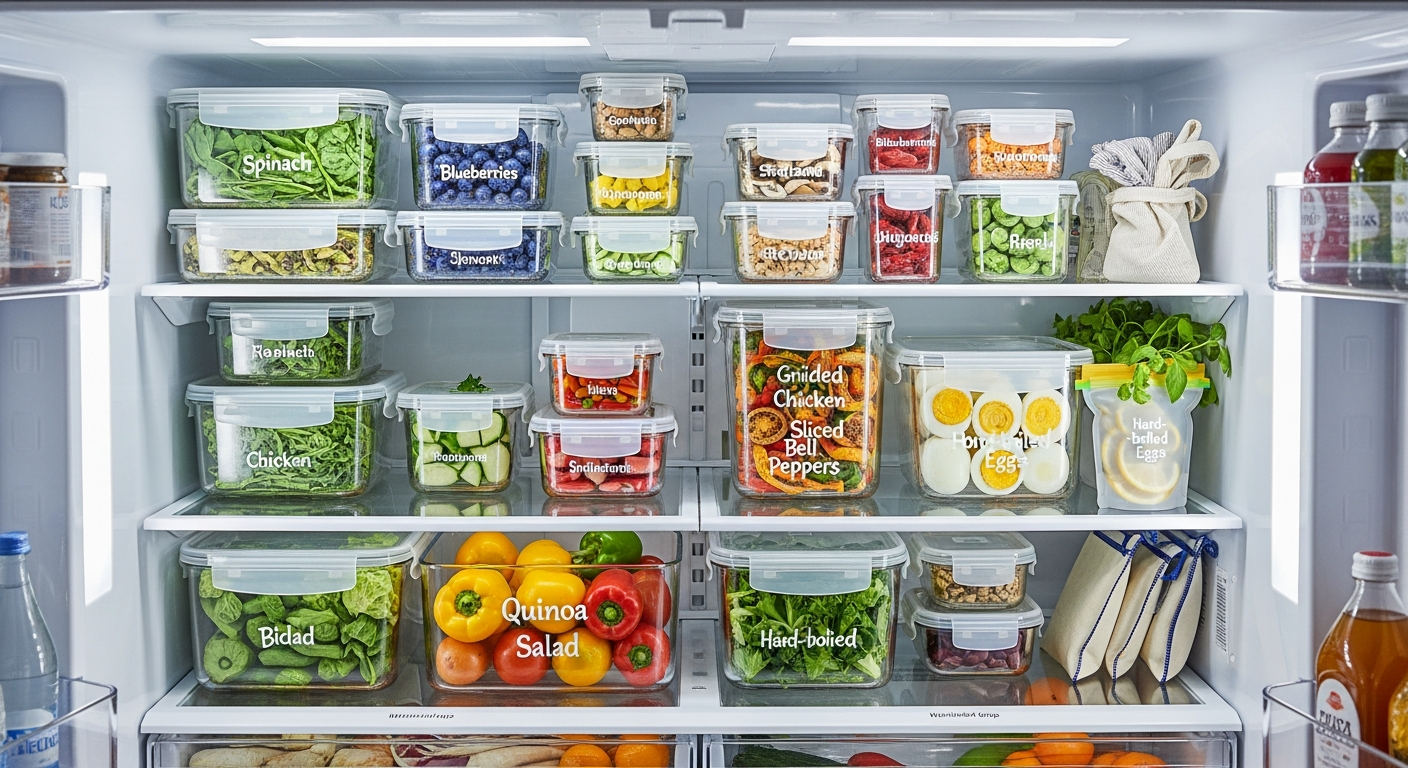
How I Stopped Wasting $200 Worth of Food Every Month (And You Can Too)
I used to throw away so much food that taking out the trash felt like a walk of shame. Wilted lettuce, moldy cheese, mystery containers from two weeks ago—my fridge was basically a food cemetery.
According to the NRDC (Natural Resources Defense Council), the average American family throws away about $1,800 worth of food annually—that’s $150 per month going straight to the garbage.
Table of Contents
- The Wake-Up Call: My Fridge Audit
- Shop Your Fridge First
- The Eat Me First Box
- Understanding Date Labels
- The Freeze Everything Strategy
- Leftover Transformation
- The Money Reality
- Key Takeaways
- Frequently Asked Questions
The Wake-Up Call: My Fridge Audit
Before fixing the problem, I needed to see how bad it was. One week of tracking everything I threw away revealed:
| Category | Waste Percentage | Dollar Impact |
|---|---|---|
| Produce | ~30% of purchases | Highest cost |
| Forgotten leftovers | 1+ container/week | Compound waste |
| Single-recipe ingredients | Majority unused | Pantry clutter |
| Expired before opening | 5-10% | Pure waste |
According to ReFED, the average American household wastes about 31% of the food they buy. Sound familiar?
Related Reading: Budget Eating Strategies That Actually Work
Shop Your Fridge First
Before Shopping Protocol
| Step | Action | Time |
|---|---|---|
| 1 | Open fridge, assess what needs eating soon | 3 min |
| 2 | Check pantry for usable staples | 2 min |
| 3 | Plan meals around what you have | 5 min |
| 4 | Create shopping list for gaps only | 5 min |
The Three-List System
| List | Contents |
|---|---|
| “Use immediately” | Items that will spoil within 2-3 days |
| “Plenty of” | What you don’t need to buy |
| “Actually need” | What to purchase |
According to the USDA, meal planning around existing inventory is the single most effective food waste reduction strategy.
The Eat Me First Box
Implementation
| Step | Action |
|---|---|
| 1 | Designate one clear container in fridge |
| 2 | Place anything close to expiring inside |
| 3 | Check box before deciding what to cook |
| 4 | Use box contents as meal foundation |
Why This Works
| Problem | Solution |
|---|---|
| “Out of sight, out of mind” | Visible container creates awareness |
| Forgetting what needs eating | Centralized location |
| Defaulting to new ingredients | Forces use of existing |
The EPA recommends visible organization as a primary waste reduction tool.
Understanding Date Labels
What Labels Actually Mean
| Label | Meaning | Safety |
|---|---|---|
| “Best by” | Peak quality date | Usually safe past date |
| “Sell by” | Store inventory guidance | Safe for consumption |
| “Use by” | Manufacturer’s quality estimate | Check before use |
| “Expires on” | Only label with safety implications | Follow carefully |
According to the FDA, most date labels indicate quality, not safety—except for infant formula, which has regulated “use by” dates.
The Sensory Test
| Check | What It Tells You |
|---|---|
| Smell | Most reliable indicator |
| Appearance | Visible mold, discoloration |
| Texture | Sliminess, unusual feel |
| Taste (small amount) | Final check if others pass |
Related Reading: How to Make Leftovers That Don’t Suck
The Freeze Everything Strategy
What Most People Don’t Know Is Freezable
| Item | Freezing Method | Use For |
|---|---|---|
| Bread | Whole loaf, slice as needed | Toast directly from frozen |
| Cheese (hard) | Grate or chunk before freezing | Cooking, not fresh eating |
| Herbs in oil | Ice cube trays | Cooking |
| Overripe bananas | Peeled, in bag | Smoothies, baking |
| Leftover wine | Ice cube trays | Cooking |
| Half onion | Chopped, in bag | Cooking |
| Vegetable scraps | Collect for stock | Homemade broth |
| Cooked rice | Portion containers | Instant side dish |
The Preemptive Freeze
| Situation | Action |
|---|---|
| Bought too much | Freeze half immediately |
| Won’t use before spoiling | Freeze now, not later |
| Sale purchase | Freeze portion for later |
According to the National Center for Home Food Preservation, freezing at peak freshness—not after something is about to spoil—yields best results.
Leftover Transformation
The Transformation Principle
| Original | Boring Reheat | Exciting Transform |
|---|---|---|
| Roast chicken | Cold chicken again | Chicken salad, tacos, soup |
| Rice | Dried out rice | Fried rice |
| Vegetables | Limp reheated veggies | Frittata, soup, grain bowl |
| Mashed potatoes | Gummy potatoes | Potato cakes |
| Stale bread | Hard bread | Croutons, breadcrumbs |
Weekly Transformation Planning
| Day | Use This | Make This |
|---|---|---|
| Monday | Fresh meal | Plan extra |
| Tuesday | Monday’s protein | Different preparation |
| Wednesday | Accumulated vegetables | Soup or stir-fry |
| Thursday | Fresh meal | Plan extra |
| Friday | “Clean out fridge” meal | Creative combination |
The Money Reality
Waste Reduction Savings
| Change | Monthly Savings Estimate |
|---|---|
| Reduce produce waste 50% | $30-50 |
| Use leftovers systematically | $20-40 |
| Freeze strategically | $20-30 |
| Shop fridge first | $20-30 |
| Total potential | $90-150/month |
Annual Impact
| Reduction Level | Annual Savings |
|---|---|
| Modest (25% less waste) | $450-550 |
| Moderate (50% less waste) | $900-1,100 |
| Significant (75% less waste) | $1,350-1,650 |
According to the World Resources Institute, food waste reduction has a 7:1 return on investment when accounting for purchase costs alone.
Key Takeaways
- Audit first — You can’t fix what you don’t measure
- Shop your fridge before the store — Use what you have
- Create an “Eat Me First” box — Visibility drives action
- Date labels mostly indicate quality, not safety — Trust your senses
- Freeze proactively — When you buy, not when it’s about to spoil
- Transform, don’t just reheat — Same ingredients, different meals
Frequently Asked Questions
How do I start reducing food waste without overhauling everything?
Start with the “Eat Me First” box—it takes 30 seconds to set up and creates immediate awareness. According to the EPA, visibility is the lowest-effort, highest-impact change you can make. Once that’s habit (about 2 weeks), add one more strategy. Gradual adoption beats ambitious overhaul that you abandon.
Is it really safe to eat food past the date on the package?
For most foods, yes. The FDA confirms that “best by” and “sell by” dates indicate quality, not safety. Use your senses: smell, appearance, texture. Exceptions requiring caution: raw meat and poultry, deli meats, fresh seafood, unpasteurized dairy. When genuinely in doubt, discard—but don’t reflexively toss good food.
How do I get my family on board with reducing food waste?
Make it tangible. Track wasted food for one week and calculate the cost—seeing money in the trash motivates change. The NRDC suggests involving household members in meal planning and making the “Eat Me First” box a family ritual. Kids especially respond to seeing the before/after impact.
What foods waste the most money for the average household?
According to ReFED research, the top wasted categories by dollar value are: (1) prepared foods/leftovers, (2) produce—especially salads, (3) bread and baked goods, (4) dairy, (5) meat. Focus reduction efforts on your personal high-waste categories for maximum impact.
How long can I actually keep leftovers safely?
The USDA recommends: refrigerated leftovers should be consumed within 3-4 days, frozen leftovers are safe indefinitely but best quality within 2-3 months. Label with dates, store at proper temperatures (refrigerator under 40°F, freezer at 0°F), and when in doubt, freeze rather than trying to stretch refrigerator time.
You don’t have to implement all of these strategies at once. Pick one or two that seem doable and start there. Even small changes add up to serious money and less waste. Your future self (and your wallet) will thank you.